
Retention isn’t enough
Why keeping people employed isn’t the same as looking after them
What retail’s retention figures aren’t telling us
And when did keeping people employed become a measure of success, rather than how they're experiencing the work?
I've been reading the latest Retail People Index, published by the Retail Trust and AlixPartners. Retail employee wellbeing is apparently stabilising. The overall Index sits at 61%, slightly ahead of where it was last year, while the proportion of employees considering leaving has fallen by seven percentage points.
Encouraging, but look a little closer:
- 47% are still considered at risk of leaving.
- Nearly four in ten are at risk of working while physically or mentally unwell.
- Employees aged 25–44 report the lowest wellbeing scores of any age group.
So, are things genuinely getting better, or are people staying because leaving feels too risky?
We talk endlessly about customer experience in retail. We measure it, optimise it and invest millions trying to improve it. But what about employee experience? Are we giving it anything near the same attention?
I’ve written about this before, I know. But again, the more I read, the clearer it becomes. Retail’s people problem isn’t simply about keeping employees. It’s about what happens to them while they’re there.
Staying doesn't mean thriving
For years, we've discussed retail employment in terms of recruitment, retention, labour costs and productivity. How do we attract people? How do we keep them? How much does employing them cost?
All reasonable business questions. But the Retail People Index raises an uncomfortable possibility.
Flight risk has fallen from 54% to 47% over the past year, yet the report suggests this may have more to do with uncertainty in the wider job market than meaningful improvements in how people feel about their work.
People might be staying because they don't feel they have much choice.
A stable workforce looks wonderful on a management dashboard, but what does it actually represent? Employees who feel valued and motivated, or people who are exhausted, anxious and reluctant to risk moving elsewhere?
And there's another interesting finding. Customer service employees have the lowest flight risk of any retail function, at 38%, but the highest risk of presenteeism, at 46%. Huh?
Presenteeism is one of those rather "corporate terms" for something very human: turning up to work when you're physically or mentally unwell.
These are the people handling complaints, resolving problems and dealing with customers when things haven't gone according to plan. Their jobs demand patience, judgement and considerable emotional energy. The report doesn't tell us why they're staying, or what's causing their poor wellbeing. But surely the contrast deserves attention.
And the pressure doesn't fall evenly across the business. Employees aged 25–44 are the only age group below the Index's wellbeing struggle threshold, scoring 58%. Managers are also more likely to consider leaving than non-managers, with stress emerging as the biggest difference.
So who's supporting the people expected to support everyone else?
Retention tells you who's staying. It doesn't tell you why, or how they're doing.
And if we're not asking those questions, how much do we really understand about the people working in our businesses?
When did abuse become part of the job?
 Then there's retail crime and customer behaviour, which have dominated industry headlines again this autumn.
New Retail Trust research released on 9 November found that 54% of shopworkers experience abuse or attacks every week, up from 33% in 2024.
(Sigh, I remember writing about this two years ago and being outraged by the figures. Now they're considerably worse!).
More than two-thirds believe dealing with abusive customers has become part of their job, while 48% say worsening abuse has made them want to quit or leave retail altogether.
Part of their job. Really? ‼️
When did being shouted at, threatened or physically assaulted become something we expect people to tolerate in exchange for a wage? And there's no pretending this is simply a customer service problem. Shoplifting is a serious commercial challenge, with employees often caught between protecting stock, following procedures and dealing with aggressive behaviour.
But there is some encouraging progress.
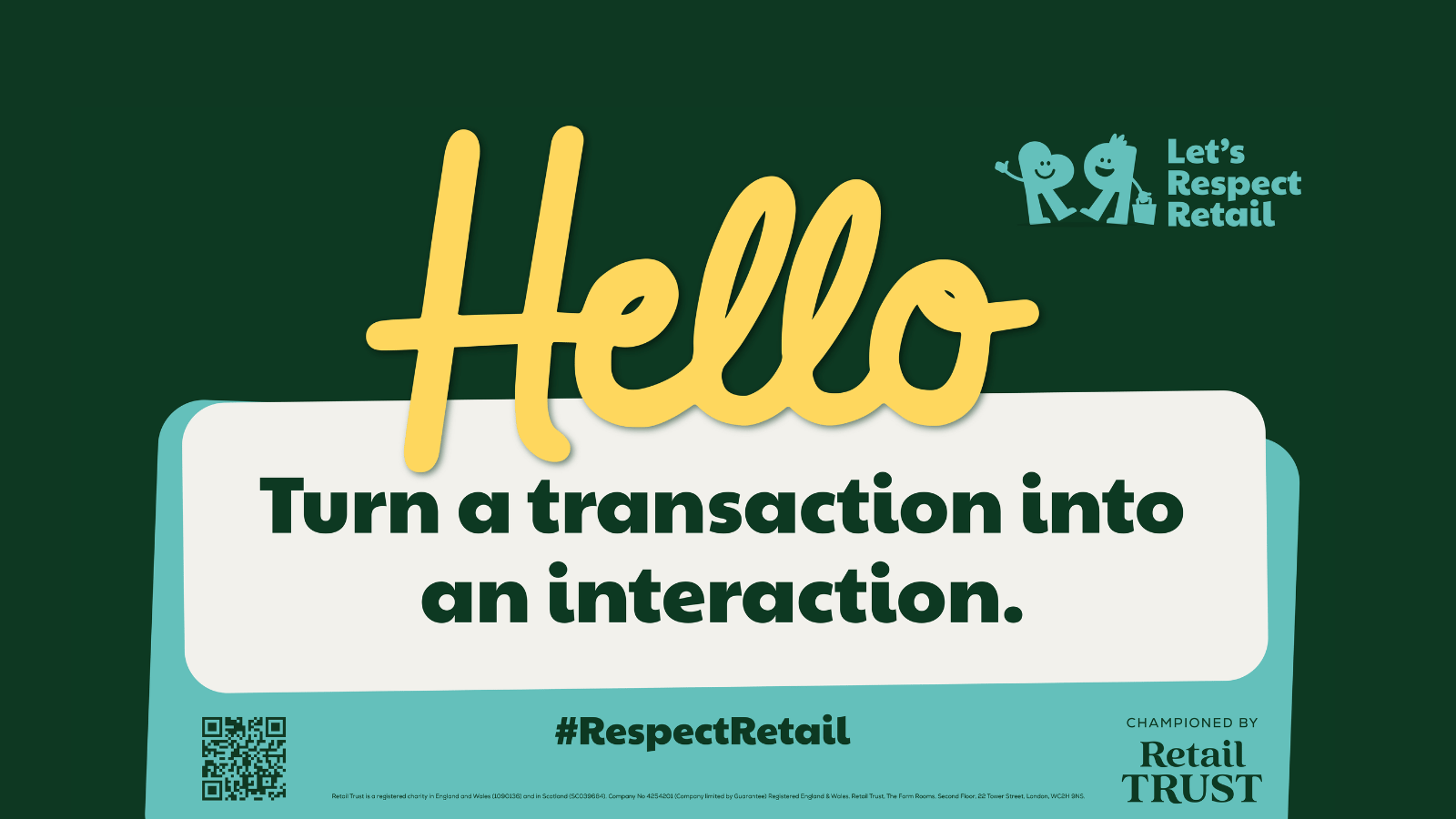
The Retail Trust's Let's Respect Retail campaign is bringing retailers, industry organisations and the public together to challenge abusive behaviour, supported by businesses including Sainsbury's, Next, Currys and Holland & Barrett.
Its posters are appearing in shops, shopping centres and public spaces, reminding customers that a hello, a thank you or a smile can change a whole moment.
And there's progress on the legislative front too, with stronger protections against workplace harassment, including harassment by customers, taking effect in October.
None of this will solve the wider problem overnight, but I applaud the work being done. The Retail Trust, industry bodies and participating retailers are raising awareness, bringing people together and pushing for change.
Because this can't be left to individual shopworkers to manage, and as customers, we have a responsibility too. Respecting the person serving you shouldn't require a national campaign. But clearly, it does.
What one exit really costs
Now, I'm not suggesting retailers are deliberately ignoring their employees. Many invest heavily in training, wellbeing and creating better working environments.
But they're also operating under enormous financial pressure. Wages are rising, business rates remain a concern and retail crime is costly.
So naturally, businesses scrutinise employment costs. How many people do we need? How can we improve productivity? Can we restructure or reduce the hours required?
All legitimate questions, but are we looking at the full picture? Think about what happens when a reliable shift supervisor hands in her notice.
It's not just the cost of recruiting a replacement. It's the Saturday shift that runs short while she's working her notice. The team member she was mentoring who suddenly loses that support. The regular customers asking where she's gone. The manager picking up twelve-hour days until someone new is up to speed.
And the colleague who was quietly thinking about leaving too, now watching how the business responds.
The Retail People Index cites research estimating that replacing an employee can cost between 30% and 200% of their annual salary, depending on the role. Wider UK research puts the annual cost of poor workplace health at £85 billion, including £21 billion linked to presenteeism.
These are broader workforce estimates rather than costs measured specifically across retail, but the commercial point stands.
Poor wellbeing doesn't just cost money. It can cost you the people you can least afford to lose.
Some retailers are already thinking differently
What interests me is that there are retailers approaching employee experience as part of how they run their businesses, rather than simply another wellbeing initiative.
Take Timpson.
Its upside-down management philosophy reverses the traditional hierarchy, giving frontline employees the authority to make decisions and putting management in place to support them. That's quite a different proposition from a head office telling employees what to do and measuring whether they've done it.
They even have a Director of Happiness, which tells you something about where this sits in the business. Employee experience is part of the operating model, not just something HR reports on.
Then there's Co-op, which launched its Colleague Promise in July 2025, shaped by the views of its 54,000 colleagues. It brings together wellbeing, development, inclusion, ownership and recognition, with a framework for tracking progress and acting on feedback.
Of course, a promise is only as good as the experience employees actually have, but involving people in defining that experience is a sensible place to start.
And I've seen something of this myself through my work with The Perfume Shop. The business has repeatedly received Top Employer recognition, but what strikes me when I work with them goes deeper than certifications and programmes. It shows in the way they celebrate people. Personal milestones and work anniversaries get a proper moment, often with a party in-store and a post on social. People join The Perfume Shop as a career, not a stopgap, and the tenure proves it. Gill Smith's leadership runs through it. People-first isn't a slogan there. It's how the business operates.
These are different businesses with different approaches, but they share something important.
Employee experience isn't simply a benefit you offer. It's shaped by how you choose to run the business.
And that brings me back to the Retail People Index.
What if we started asking better questions?
This is what I find encouraging about the Retail Trust's work. Rather than waiting until employees leave, become disengaged or take time off, the Index is designed to identify warning signs earlier.
It measures hope, health and happiness alongside the likelihood of leaving and the risk of working through poor wellbeing.
I applaud the Retail Trust for this. It's a positive step towards understanding what's actually happening to people at work, rather than simply measuring the consequences when things go wrong.
And if retailers can analyse customer behaviour in extraordinary detail, why shouldn't they apply the same curiosity to their employees?
Here are five questions I'd like to see businesses asking more often:
- Why are people staying? Is it because they want to, or because leaving feels too risky?
- Do employees feel safe at work? And do they trust the business to act when something happens?
- Are we recognising the emotional demands of customer-facing roles? Or only measuring performance?
- Do managers have the time and support to look after their teams? Or are they struggling under the same pressures?
- What changes when employees tell us something isn't working? Are we acting on feedback, or simply collecting it?
These aren't particularly complicated questions, but the answers could tell us considerably more than retention figures alone.
The Index gives businesses a starting point, not a ready-made solution. Where it shows pressure points, investigate what's driving them, and then do something with what we learn.
Because asking employees how they feel is one thing. Changing the conditions affecting how they feel is another.
Retail's greatest asset. Really?
Every industry loves to describe its people as its greatest asset. Retail is no exception.
It's a familiar phrase in annual reports, corporate values and leadership presentations, but what does it actually mean?
The Retail People Index shows some encouraging improvements, and there are businesses doing excellent work to support their teams. But it also reveals a workforce under considerable pressure.
I don't think retail's biggest people problem is simply recruitment, retention or the rising cost of employment.
It's how we think about the people already working in the industry.
Are they a cost to be managed, a resource to be optimised or people whose experience matters just as much as the customers they're serving?
Of course, there's a commercial benefit to getting this right. Better employee experience can improve retention, productivity and customer service.
But people deserve to feel safe, respected and valued at work regardless of what that contributes to the bottom line.
And if we're genuinely serious about creating better retail experiences, we can't keep treating customer experience and employee experience as separate conversations.
So I'll come back to the question that started all of this. When did keeping people employed become a measure of success, rather than how they're experiencing the work?
Link to: Retail People Index 2026